

Dental Practice Marketing Giveaways: The 7 Most Effective Tools
A giveaway alone doesn’t make dental practice marketing — what matters is which promotional item lands at which touchpoint. Anyone who plans dental practice giveaways strategically doesn’t just pick from a catalog, but assigns each promotional item to a specific moment in the patient journey: reception, recall, treatment completion, or trade show booth. This article outlines seven categories, the criteria for choosing them, and how to plan quantities, budget, and deployment realistically.
Why Giveaways Actually Work in Dental Practice Marketing
Patients forget flyers, but they use things that stay in their everyday life: in a pocket, a wallet, a toiletry bag. This is exactly where effective dental practice marketing comes in — not in the reach of a promotional item, but in how long it stays around. A giveaway that sits in a wallet for three months reminds patients of the practice far more often than a flyer left behind in the waiting room.
One thing to keep in mind: under German advertising law for medicinal products, promotional gifts to patients must remain low-value and purely informational. What exactly is allowed and where the limits lie is explained in detail in the article on promotional gifts and the Heilmittelwerbegesetz.
The 7 Most Effective Giveaway Categories at a Glance
- Business card with design – classic first point of contact at reception, ideal for referrals to family and friends.
- Appointment card – reduces no-shows when date, time, and contact details are clearly displayed.
- Recall card – reminds patients of their next check-up and stays visible between appointments.
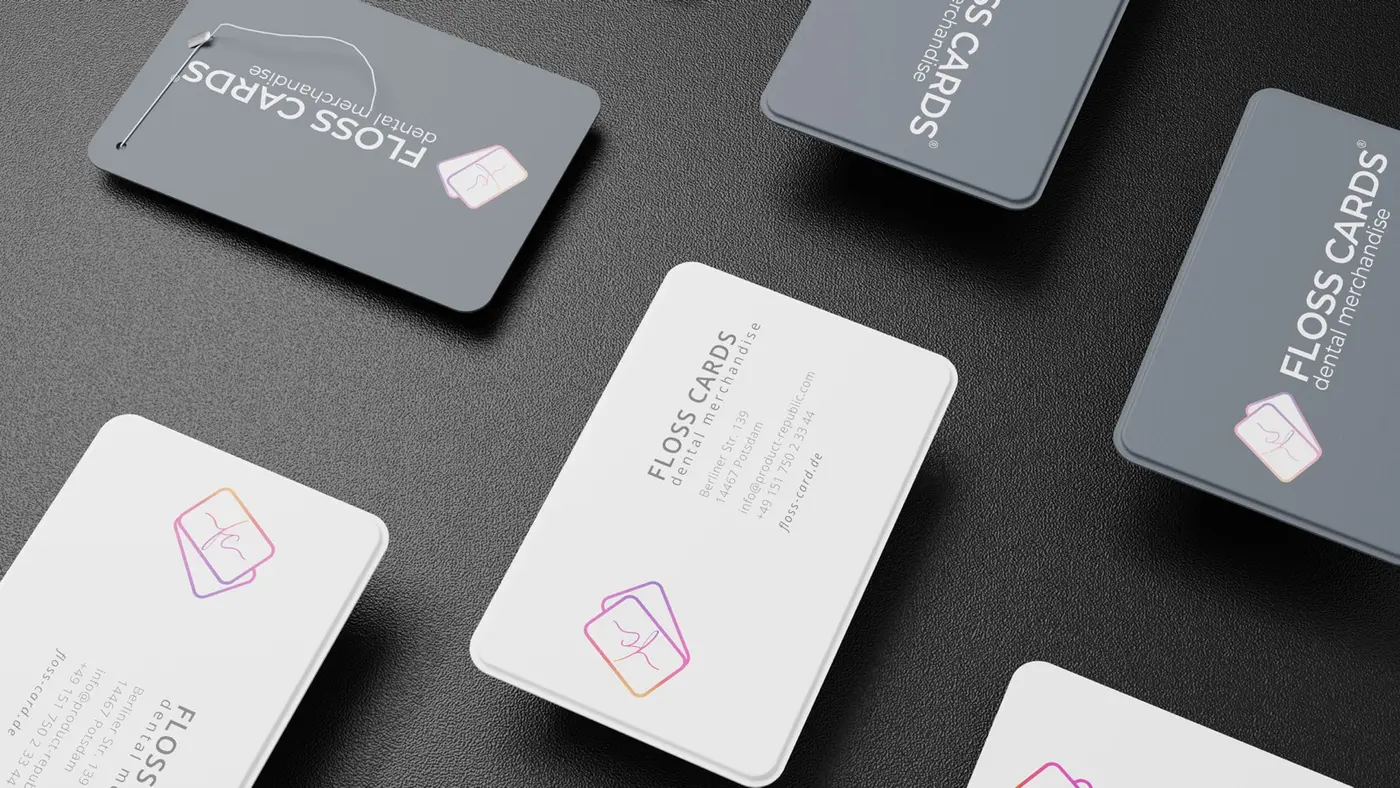
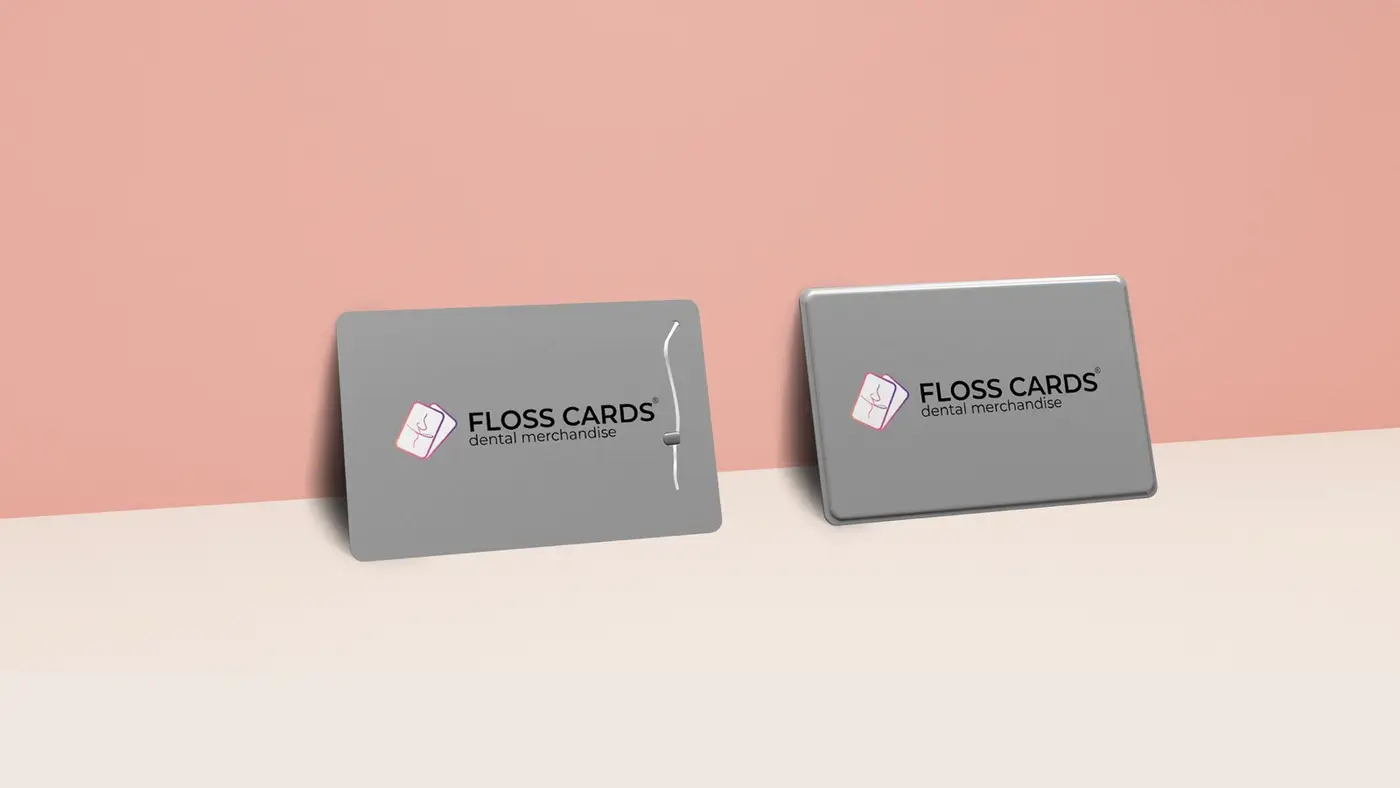
- Floss in business card format – combines practice contact details with real everyday value, since the card itself gets used.
- Christmas gift for patients – a one-off, seasonal touchpoint with high visibility around the turn of the year.
- Trade show giveaway – for dental brands, labs, and dealers at trade fairs, where many competitors vie for attention.
- Promotional items for orthodontics – tailored to young patients with braces and longer treatment periods.
Each category has its own point of use and its own target audience. Rather than rolling out all seven at once, it’s worth starting with one or two touchpoints that require the least effort and deliver the most consistent results: reception and recall.
Selection Criteria: What a Giveaway Really Needs to Deliver
Before you place an order, a short checklist helps:
- Practical value: Does it serve a function patients actually need?
- Format size: Does it fit in a wallet, handbag, or backpack?
- Design flexibility: Can logo, practice colors, and contact details be clearly placed?
- Legal framework: Does the promotional gift stay low-value under the Heilmittelwerbegesetz?
Floss in business card format meets several of these criteria at once: 85 × 55 mm format, just 1.6 mm thin, with around 10 metres of waxed floss per card. The card works both as a contact tool and a practical everyday item. How the printing works technically, which flavours are available, and how volume tiers relate to pricing is covered in detail in the article Printing floss with your logo.
Quantity Planning and Everyday Use in the Practice
The quantity depends on the touchpoint, not a flat number:

- Reception and first contact: smaller batches are sufficient, since consumption is spread out over months.
- Recall mailings: base the quantity on your patient database and plan realistically with several weeks’ lead time.
- Trade show appearances: higher quantities, since many contacts happen in a single day.
- Seasonal campaigns such as Christmas: place your order early enough, as production usually takes 4–5 weeks, and around 6 weeks between mid-January and the end of February due to higher demand.
At floss cards, the standard volume tiers are 500, 1,000, 2,500, 5,000, and 10,000 units. Mint is available from as little as 500 units, while strawberry, lemon, coconut, and vanilla are available from 5,000 units upward. The unit price decreases as quantity increases; you can see the total price directly in the configurator, with no need to request a quote by email.
In terms of design, single-sided (4/0) and double-sided (4/4) CMYK printing are available, along with spot UV coating and hot foil stamping in matte white, glossy white, gold, silver, copper, blue, or green. For dental brands and labs promoting multiple product lines, the double-sided option works well for placing logo and contact details on separate sides.
Common Mistakes in Giveaway Selection
- Introducing too many promotional items at once, without measuring which one is actually being used.
- Ignoring format: Large-format giveaways end up in everyday use far less often than business-card-sized ones.
- Placing orders too late, especially around seasonal campaigns with longer production times.
- Overlooking the legal framework: Promotional gifts to patients must remain low-value, or warning letters can follow.
- Leaving design to chance: Without the right print files, even a good format can look unprofessional. The print file guidelines show which file formats and resolutions are required.
Which seven promotional items are used most often across dental practices overall, and what they look like in detail, is covered in the article Promotional Gifts for Dental Practices: 7 Ideas That Work as a companion piece to this selection strategy.
If you’d like to test giveaways for dental practice marketing before ordering a larger batch: a free sample lets you feel the format, thickness, and print quality of the floss card firsthand. After that, you can select the right volume tier and finish in the configurator within minutes.
Frequently asked questions
How many giveaways should a practice use at the same time?
Two to three touchpoints are usually enough — for example, reception, recall, and one seasonal giveaway. Adding more variations makes it harder to track which promotional item is actually being used.
What sets an effective giveaway apart from a standard promotional item?
The key factor is how long it stays in use: a giveaway with practical value that stays in a wallet or bag keeps the practice top of mind for weeks, while a plain flyer usually lasts only a few minutes.
Which formats work especially well at reception?
Small, flat formats such as business cards or floss in business card format can be handed out discreetly at reception and fit easily into any pocket or bag.
How far in advance should I order giveaways for seasonal campaigns?
Plan for about 4 to 5 weeks of production time, and around 6 weeks during the busy period between mid-January and the end of February, followed by shipping.
Your Floss Cards – designed in minutes
Live preview, transparent volume pricing, artwork upload. Or let us design them for you.
Keep reading
Corporate Promotional Giveaways: Function Beats Quantity
Planning promotional giveaways for businesses the right way: why function and format matter more than quantity, with real examples and order-size guidance.
Dental hygiene giveaways: what patients take home after cleaning
A fitting giveaway after professional teeth cleaning: what it should do, texts for the card, how to hand it over and how many cards your practice needs.