


Dental Patient Experience: Small Steps, Big Impact
Not every improvement in a dental practice calls for a new concept or a bigger budget. Often it’s enough to take a closer look at a few points in the daily routine. Dental patient experience isn’t shaped by one big factor, but by many small ones: the greeting at reception, the waiting time, the last sentence before saying goodbye. Shaping these moments deliberately changes how patients perceive the practice – without any need for renovations or new software.
Why small measures often have more impact than big projects
Big marketing projects take time, coordination and often outside partners. Small measures, on the other hand, can be implemented within a few weeks – and the results show immediately. A rephrased greeting, a tidier front desk or a small gesture at check-out all cost very little, yet every patient who walks through the door notices them. The effect adds up: making small improvements at several points along the way noticeably changes the overall impression of the practice.
We’ve covered which touchpoints are worth considering and how they fit together in our article Dental practice marketing: building patient loyalty with small touchpoints. This article focuses on how individual steps can actually be put into practice day to day.
The patient journey step by step
A good starting point is to walk through the practice from a patient’s perspective, stop by stop, and ask at each one: what stands out here – positively or negatively?
Check-in and reception
- Is the patient’s name used correctly, with a friendly greeting?
- Is there something at reception that makes the wait more worthwhile – information material, a small gesture?
- Is the process clearly explained to new patients?
Waiting room
- What impression does the room make on a first-time visitor?
- Is there up-to-date information on services or opening hours?
- Is the waiting time communicated transparently?
Treatment and check-out
- Is there a brief summary at the end of treatment of what comes next?
- Is there a small, practical gesture at check-out – for example, something for home oral care?
- Is the next appointment actively mentioned, or does it only happen via the appointment card?
For a closer look at how to record a booked appointment, see our article on the dental appointment card. For rebooking patients, it’s also worth checking out our dental practice recall card – another small building block with a big effect on appointment rates.
A micro-touchpoint with practical value
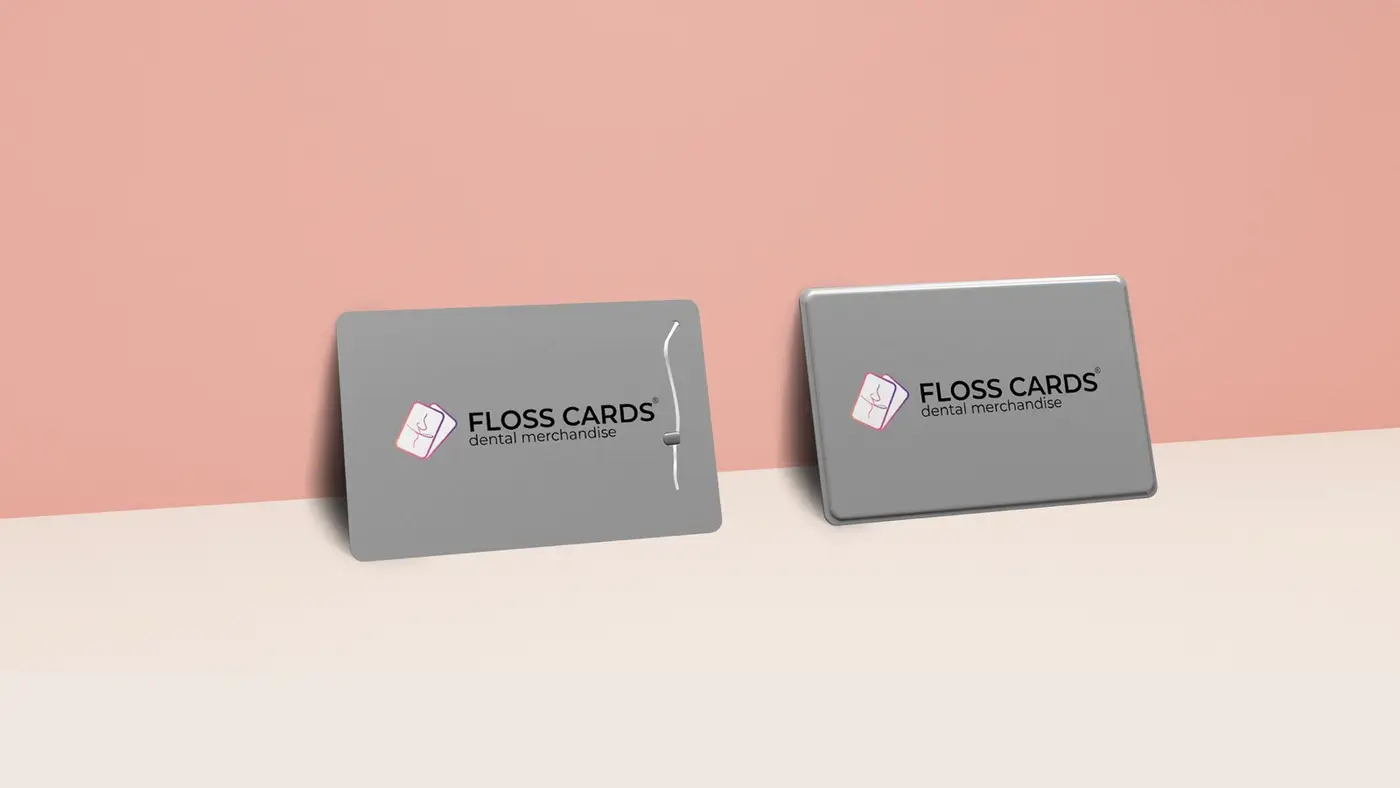
Especially at the point where treatment ends and everyday life resumes, it pays to offer something patients actually take with them and use. Floss Cards are dental floss in a business-card format: 85 × 55 mm, just 1.6 mm thin, with around 10 meters of waxed floss per card. They fit into a wallet and don’t simply get thrown away – they get used in daily life, unlike many classic promotional giveaways that end up in a drawer.
For dental practices, this is a promotional item that actually supports the message of the treatment: it’s a reminder of daily oral hygiene rather than just another giveaway. You can read more about how this format performs in everyday practice in our article Floss business cards: the promotional item patients actually keep. One thing to keep in mind: as a gift for patients, the card should remain low-value and purely functional – find out more in our post Promotional gifts for dental patients: what Germany’s Heilmittelwerbegesetz allows
Implementation within the team: how to make it stick
Small measures rarely fail because of the idea itself – they fail in everyday execution. Clear responsibilities help make sure new routines actually take hold:

- Appoint one person responsible for each touchpoint – for example, the front desk for the greeting.
- Align briefly as a team on exactly what should change, ideally as part of an existing meeting rather than a separate one.
- Provide material that supports the new routine – for example, a small gesture at reception or check-out that everyone on the team has within easy reach.
- Check back after four to six weeks to see whether the new step has become routine or quietly faded out.
If a promotional item is meant to become part of that routine, it pays to plan ahead. Production of Floss Cards typically takes around four to five weeks, and about six weeks between mid-January and the end of February. Factoring this into your planning means the material is ready in good time, instead of having to improvise at short notice.
Common mistakes when implementing small measures
- Tackling too much at once. It’s better to genuinely change two or three touchpoints than to half-heartedly adjust ten.
- No clear ownership. Without someone responsible, the measure tends to fizzle out within a few weeks.
- Material with no connection to the practice. A promotional item without a logo or practice colors feels generic and isn’t memorable.
- No follow-up. Even without detailed statistics, a short team review helps show whether anything has actually changed.
The same principle applies to designing a branded promotional item as to the rest of your practice’s branding: stay consistent. Colors, fonts and tone of voice should match your dental practice business card and all other materials, so patients recognize the practice at a glance.
From concept to finished material
Small steps are best tested before ordering a larger quantity. Our configurator lets you see straight away how a Floss Card looks with your own design and logo, and what each quantity tier costs – from smaller runs starting at 500 cards up to larger volumes. If you’d rather hold the material in your hands before deciding, you can request a free sample by post and test directly with your team how patients respond to it.
You’ll find more examples and formats for everyday practice life in our magazine.
Frequently asked questions
Where’s the best place to start when improving the patient experience?
The most effective approach is to walk through the patient journey from check-in to check-out and make targeted changes at two or three points, rather than trying to change everything at once.
How long does it take before a small touchpoint like Floss Cards is ready to use as a promotional item?
Production typically takes around four to five weeks, and about six weeks between mid-January and the end of February. Shipping follows after that.
Are dental practices even allowed to give patients small gifts?
Yes, as long as the promotional item remains low-value and purely functional. You’ll find the details in our magazine article on Germany’s Heilmittelwerbegesetz.
Do you need a new promotional item for every touchpoint?
No. A single consistent item, such as a Floss Card with your practice logo, is often enough to use at several points – for example at check-out after treatment or as an insert with the recall card.
Your Floss Cards – designed in minutes
Live preview, transparent volume pricing, artwork upload. Or let us design them for you.
Keep reading
Dental Practice Branding in a Small Format: Every Detail Counts
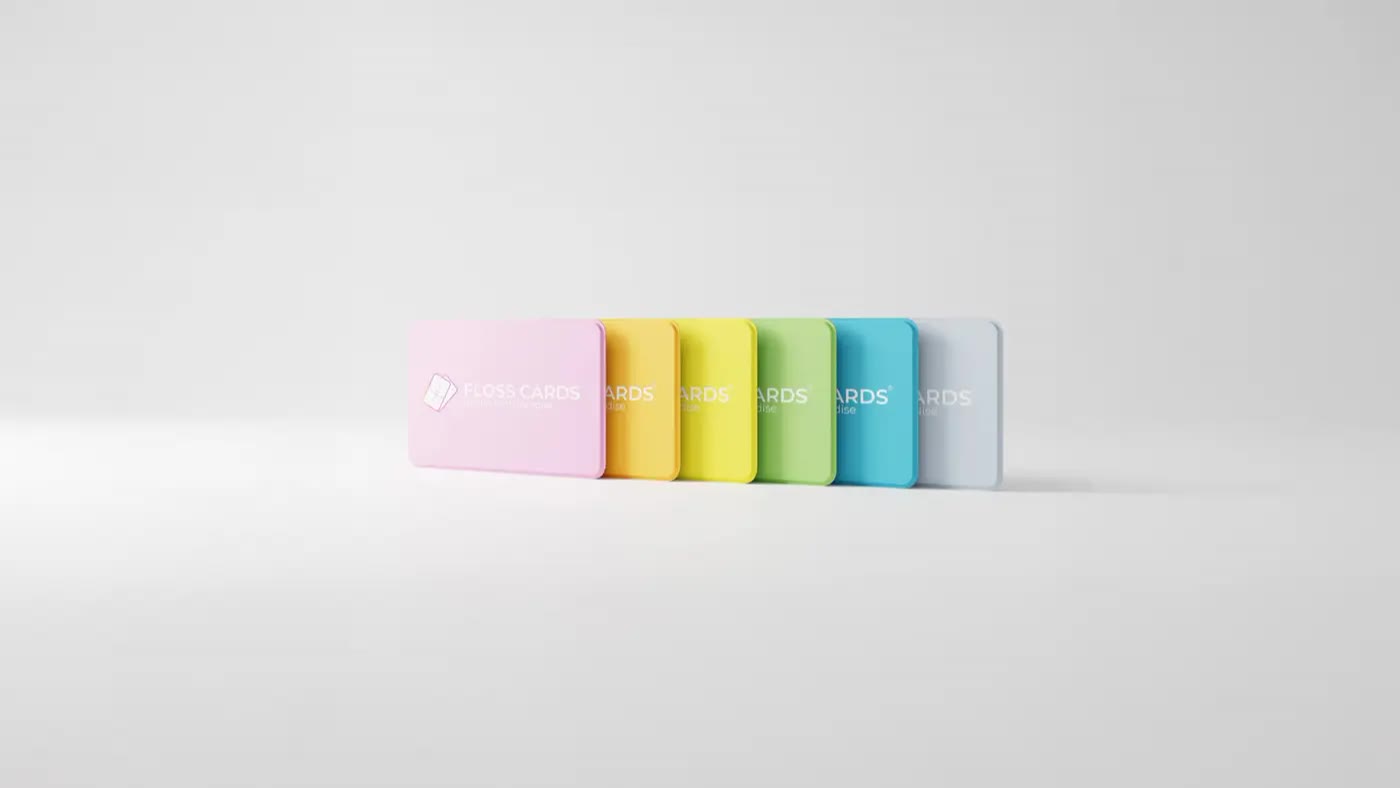
Dental practice branding: how logos, colors, and fonts stay consistent even on an 85 × 55 mm card. Practical tips for practices, labs, and dental brands.
Corporate Promotional Giveaways: Function Beats Quantity
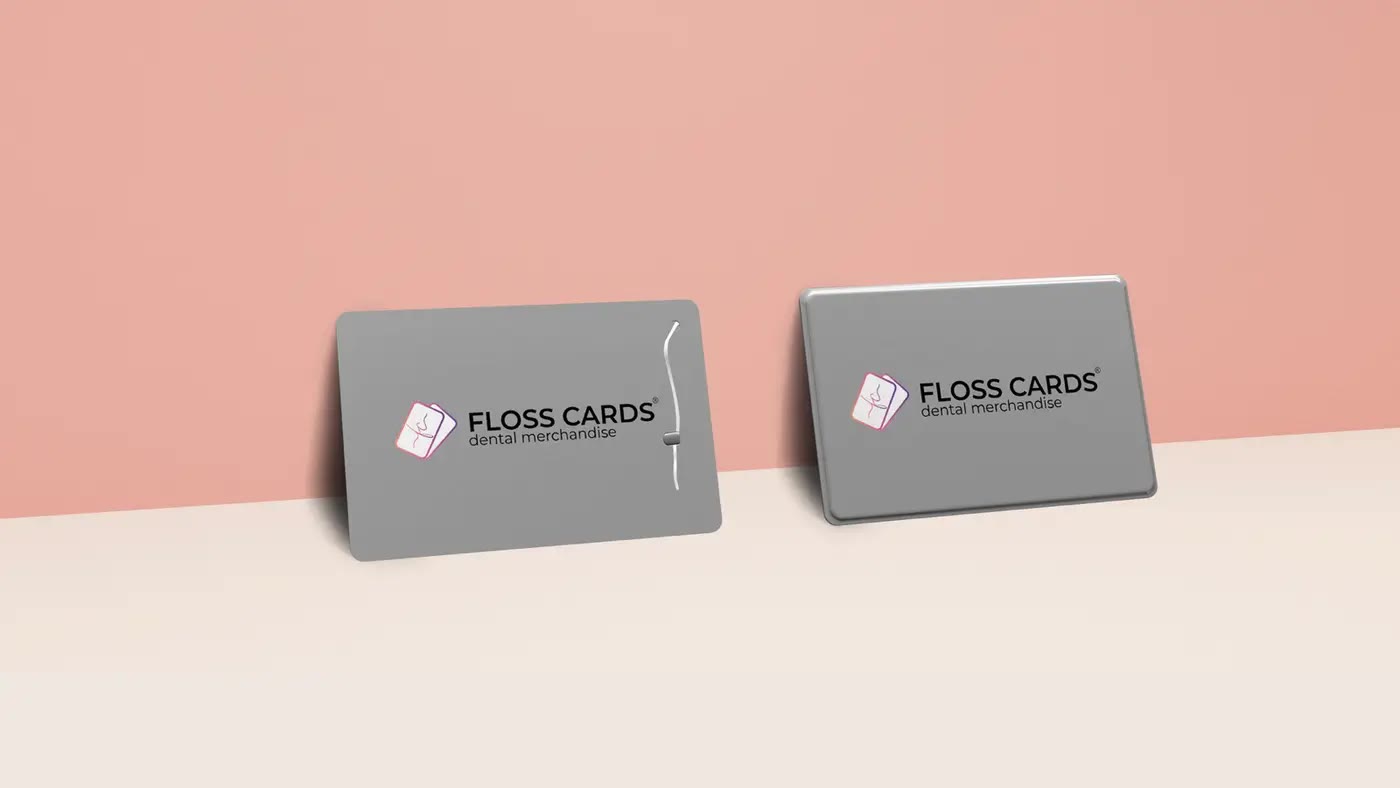
Planning promotional giveaways for businesses the right way: why function and format matter more than quantity, with real examples and order-size guidance.